

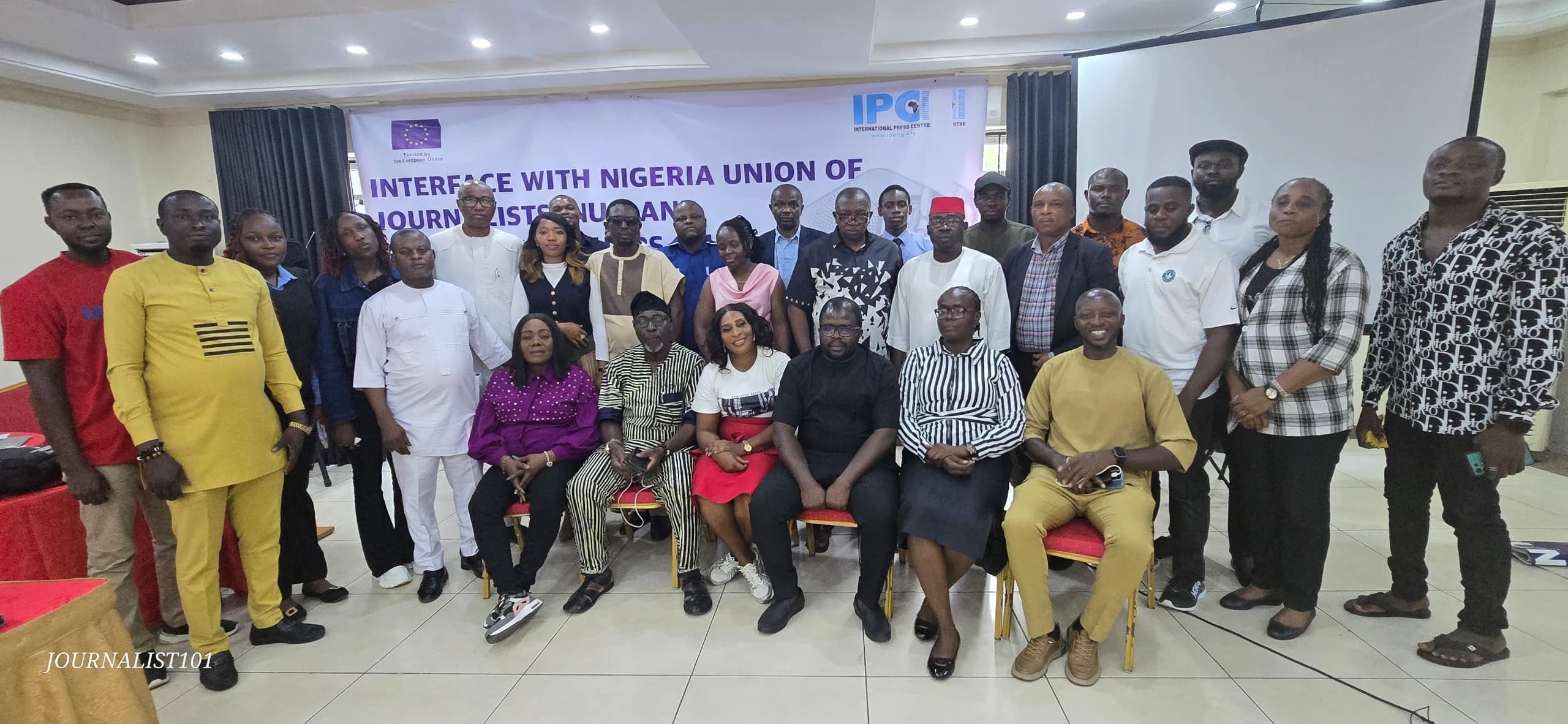

The International Press Centre (IPC) has intensified efforts to strengthen professional and accountable journalism ahead of the 2027 general elections, bringing together online publishers, editors and media executives in Enugu for a capacity-building engagement focused on fact-checking, ethical reporting and inclusive electoral coverage.
At the workshop, media practitioners were challenged to move beyond routine political reporting and embrace people-centred journalism that scrutinises public office holders, verifies political claims and amplifies the concerns of ordinary Nigerians.
The one-day interface and capacity-building workshop, held on Thursday, November 5, 2026, at the International Conference Centre (ICC), Enugu, was organised by the IPC with funding support from the European Union under its support to democratic governance initiatives in Nigeria.
Speaking at the engagement, IPC Executive Director, Dr. Lanre Arogundade, represented by the Programme Manager, Stella Nwofia, urged online publishers and editors to place accuracy, professional ethics and accountability at the centre of their electoral reportage.
Arogundade cautioned against the growing pressure to publish breaking stories at the expense of verification, noting that digital platforms, while expanding access to information and public participation, had also accelerated the spread of misinformation, manipulated content, hate speech and divisive narratives.
He therefore called on media practitioners to strengthen their fact-checking skills, particularly when reporting politically sensitive issues, insisting that verification must remain an essential component of responsible journalism.
He also emphasised the importance of inclusive electoral reporting, urging journalists to give adequate attention to women, young people, persons living with disabilities, internally displaced persons and other underrepresented groups whose voices are often overlooked in mainstream political conversations.
The IPC boss further stressed the need to protect journalists’ safety, independence and professional freedom, warning against intimidation, harassment and unlawful interference with their legitimate responsibilities.
He maintained that the success of the engagement would ultimately be measured by the quality of stories published, claims verified, citizens’ concerns amplified and accountability questions raised in the months leading to the 2027 elections.
In a major presentation, Professor Ifeoma Dunu, Director of UNIZIK Radio, called on Nigerian journalists to move beyond the conventional coverage of political rallies, endorsements, defections and campaign activities to embrace robust accountability journalism.
Presenting a paper titled, “2027 General Elections in the Context of Democratic and Accountability Reporting: Scanning the Electoral Environment and Reporting Citizens’ Priority Concerns,” Dunu challenged media organisations to make citizens’ welfare, democratic rights and public accountability the driving forces of their electoral coverage.
She cautioned against what she described as horse-race journalism, which focuses largely on political personalities, party activities, campaign rhetoric and the contest for power, often at the expense of issues that directly affect the lives of citizens.
According to her, journalists must go beyond reporting what politicians say by investigating what they do, verifying their claims and examining how their decisions affect the people they govern.
“Effective election journalism must move beyond reporting what politicians say to investigating what they do, verifying what they claim, and establishing how their decisions affect citizens’ lives,” she stated.
The communication scholar explained that election reporting should not be treated merely as a contest between political candidates but as an opportunity to examine public needs, policy choices, democratic rights and the responsibilities of elected officials.
She outlined a three-stage reporting framework for journalists covering the electoral cycle.
For the pre-election period, she urged journalists to investigate citizens’ priority needs, scrutinise candidates’ promises and demand concrete evidence of how proposed policies would be implemented.
On election day, she called for close monitoring of voters’ access to polling units, their freedom and safety, the consistent application of electoral regulations and the verification of reported incidents.
For the post-election period, Dunu urged journalists to sustain their watchdog responsibility by tracking campaign promises, monitoring governance, examining service delivery and demanding transparency in the resolution of electoral complaints.
She emphasised that citizens’ concerns must shape newsroom priorities before, during and after elections, stressing that the media remains a critical pillar of democratic accountability.
Earlier, Nwofia highlighted the importance of continuous professional development, observing that the growing demand for speed and online visibility sometimes undermined accuracy and professional standards.
She expressed confidence that the training would strengthen the capacity of online publishers in Enugu, improve their newsroom operations and enhance their visibility within the national media space.
Also speaking, the Chairman of the Corporate Online Chapel of the Nigeria Union of Journalists (NUJ), Enugu State Council, Clinton Umeh, pledged that participating publishers would translate the knowledge acquired into improved professional practices.
Umeh described the initiative as a significant intervention for independent online media practitioners, many of whom had gained years of experience in established media organisations before establishing their own platforms.
He acknowledged the competitive pressures of digital publishing but maintained that professional competence, accuracy and commitment remained essential to the credibility and sustainability of online media businesses.
He also called for the continuation of similar capacity-building opportunities to promote professional networking, collaboration and the growth of independent online journalism in Enugu State.
The engagement brought together editors, publishers, journalists and other media stakeholders to strengthen the role of the press in promoting credible information, democratic participation and accountable governance ahead of the 2027 general elections.
With political activities expected to intensify as the elections approach, the central message from the workshop was clear: Nigerian journalism must go beyond who is contesting for power to examine what the people need, what candidates promise, what leaders deliver and how citizens can hold public officials accountable.